Why should I cleanse my liver?
The liver, the largest organ in the body, is essential in keeping the body functioning properly. The whole liver together weighs 3-4 pounds and is located right below the heart. It ranges from a light pink to a dark red color. The liver and gallbladder are responsible for a number of functions. One of the main functions is to help in digestion. Blood passes through the liver at the rate of 1.4 liters per minute. The liver holds about 10% of all the blood of the body. The liver stores iron, copper, vitamin A, many of the B-complex vitamins, and vitamin D. The liver helps the heart pass blood to get to every part of the body. the liver is very important to stay alive. It removes or neutralizes poisons from the blood, produces immune agents to control infection, and removes germs and bacteria from the blood. It makes proteins that regulate blood clotting and produces bile to help absorb fats and fat-soluble vitamins. You cannot live without a functioning liver.
In cirrhosis of the liver, scar and compromised tissue replaces normal, healthy tissue, blocking the flow of blood through the organ and preventing it from working as it should. Cirrhosis is the eighth leading cause of death by disease, killing about 25,000 people each year. Also, the cost of cirrhosis in terms of human suffering, hospital costs, and lost productivity is high.
Loss of liver function affects the body in many ways. Following are common problems, or complications, caused by cirrhosis.
Edema and ascites. When the liver loses its ability to make the protein albumin, water accumulates in the leg (edema) and abdomen (ascites).
Bruising and bleeding. When the liver slows or stops production of the proteins needed for blood clotting, a person will bruise or bleed easily.
Jaundice. Jaundice is a yellowing of the skin and eyes that occurs when the diseased liver does not absorb enough bilirubin.
Itching. Bile products deposited in the skin may cause intense itching.
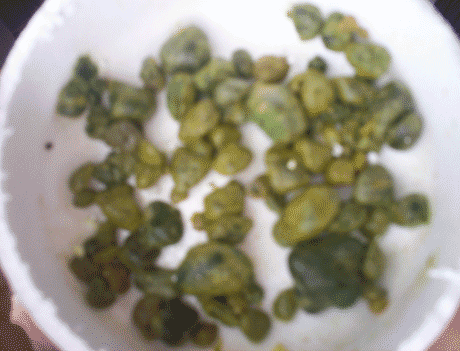
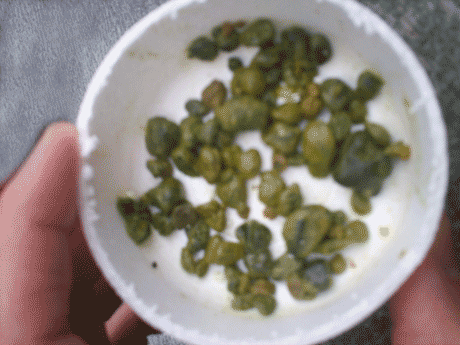
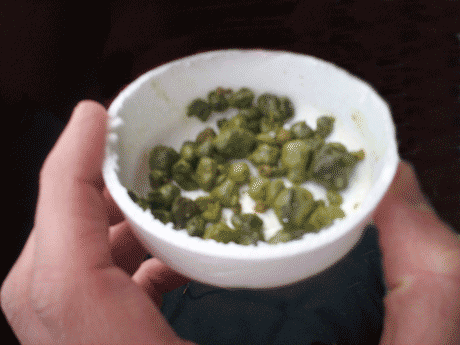
Gallstones. If cirrhosis prevents bile from reaching the gallbladder, a person may develop gallstones.
Toxins in the blood or brain. A damaged liver cannot remove toxins from the blood, causing them to accumulate in the blood and eventually the brain. There, toxins can dull mental functioning and cause personality changes, coma, and even death. Signs of the buildup of toxins in the brain include neglect of personal appearance, unresponsiveness, forgetfulness, trouble concentrating, or changes in sleep habits.
Sensitivity to medication. Cirrhosis slows the liver's ability to filter medications from the blood. Because the liver does not remove drugs from the blood at the usual rate, they act longer than expected and build up in the body. This causes a person to be more sensitive to medications and their side effects.
Portal hypertension. Normally, blood from the intestines and spleen is carried to the liver through the portal vein. But cirrhosis slows the normal flow of blood through the portal vein, which increases the pressure inside it. This condition is called portal hypertension.
Varices. When blood flow through the portal vein slows, blood from the intestines and spleen backs up into blood vessels in the stomach and esophagus. These blood vessels may become enlarged because they are not meant to carry this much blood. The enlarged blood vessels, called varices, have thin walls and carry high pressure, and thus are more likely to burst. If they do burst, the result is a serious bleeding problem in the upper stomach or esophagus that requires immediate medical attention.
Problems in other organs. Cirrhosis can cause immune system dysfunction, leading to infection. Ascites (fluid) in the abdomen may become infected with bacteria normally present in the intestines, and cirrhosis can also lead to kidney dysfunction and failure.


Normal liver-holes are bile ducts

A liver with Metastatic Adenocarcinoma-

An example of Haemosiderosis.

Hepatic Cell Carcinoma.

Fatty Liver change.
Her are some interesting statistics:
- So far, 240 people submitted answers to the survey. 218 ( 91% ) were glad they started flushing. 5 regretted.
- 46 reported gallstones attacks. 23 of 46 (50%) cured, 25 improved
- 46 reported suffering from acid reflux before flushing. 11 fully cured after flushing while 18 reported significant improvement.
- 59 reported abdominal pain. 11 fully cured , 22 reported significant improvement
- 52 reported acne. 5 fully cured , 22 reported significant improvement.
- 47 reported anxiety. 3 fully cured , 11 reported significant improvement.
- 72 reported bloating. 7 fully cured, 19 reported significant improvement.
- 46 reported cold extremities. 3 fully cured , 7 reported significant improvement.
- 66 reported constipation. 3 fully cured, 14 reported significant improvement
- 56 reported fatigue. 4 fully cured, 18 reported improvement
- 18 reported high total cholesterol. 1 normalized , 7 improved
People suffering from gallstones attacks were told not to consume fat, if they want to avoid gallstones attacks. But, large amount of fat (olive oil) cured 50% of them! No medical doctor told them that little detail.
|